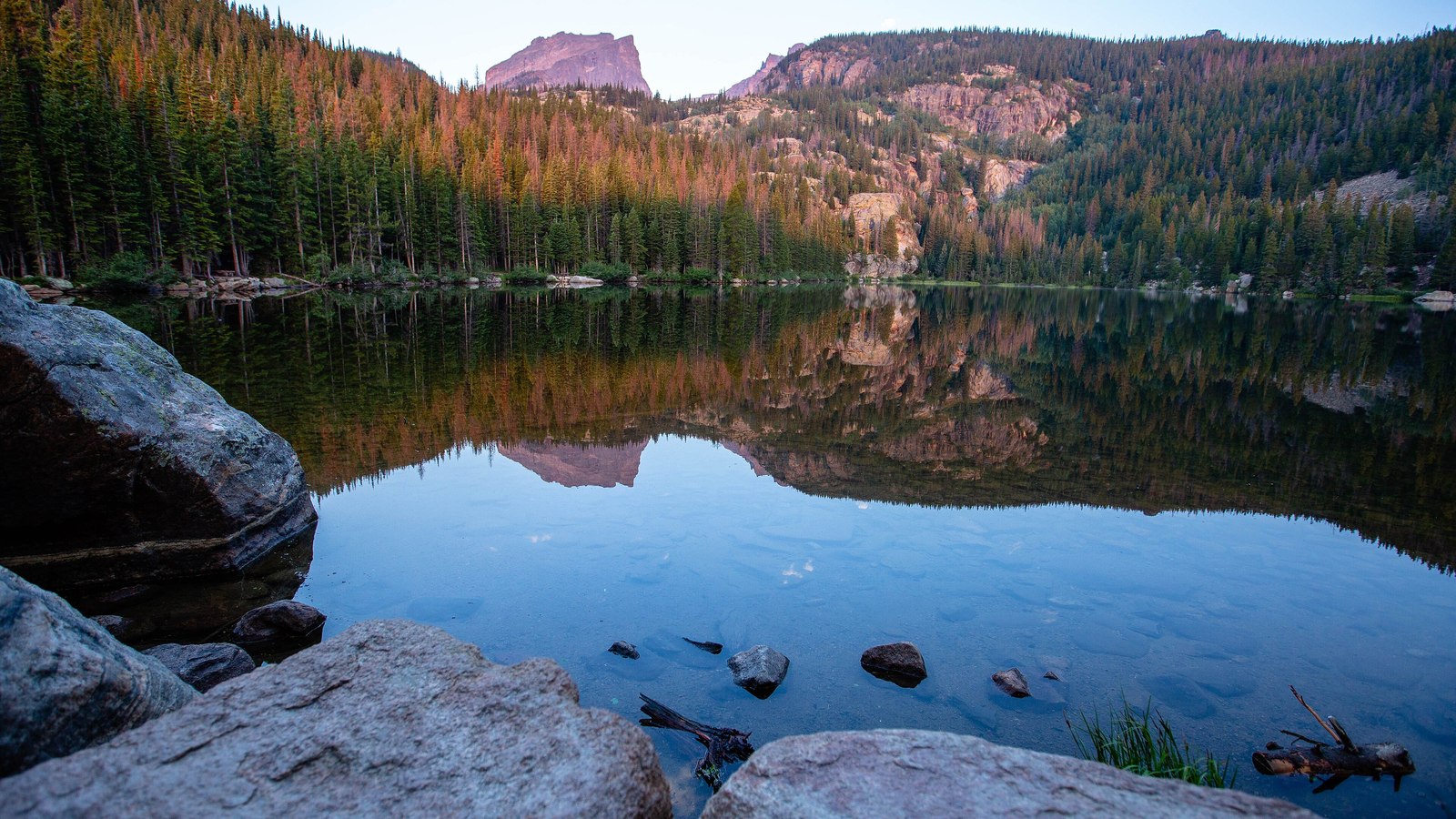
Rocky Mountain is the park where the calendar and the altitude plan the trip before you do. A reservation system decides which mornings you can enter, the trailheads start near 9,500 feet, and the great road over the top is open for barely five months. First itineraries ignore all three and pay for it in headaches and missed windows. This route is ordered the way the park demands: the gentle day first while your body catches up, the high road second, the quiet water day last.
Three days is the right size for a first visit in the main season (late spring to early fall) at a moderate hiking pace. This page is the Rocky Mountain entry in our national parks guides, and everything in it, the order, the timing, the warnings, comes from our own Rocky Mountain planner, with fees and windows verified against the park's official pages on October 15, 2026.
The route at a glance
The route, day by day
-
Day 1
Bear Lake corridor
Timed Entry Plus reservation, Sprague Lake, Bear Lake, Alberta Falls, Moraine Park late light.
Base: Estes Park
-
Day 2
Trail Ridge Road, end to end
Many Parks Curve, the Alpine Visitor Center, down to Grand Lake, back over the top.
Base: Start end / Grand Lake
-
Day 3
West side water
Wild Basin, Copeland Falls and Calypso Cascades, Lily Lake on the way back.
Base: Onward
Before the days: the two decisions that shape the trip
There is no lodge inside this park, so the first decision is which side to sleep on. Everyone sleeps in a campground or a gateway town. Estes Park, at the east entrances, has the rooms, the restaurants, and the Bear Lake access. Grand Lake, at the west entrance, is quieter and puts Trail Ridge Road's west side and the Colorado River trailheads at your door. Campgrounds: Moraine Park and Glacier Basin on the east side, Timber Creek on the west, plus smaller Aspenglen and Longs Peak (tents only), reservable on recreation.gov up to 6 months ahead. One caution for 2026: Moraine Park, the largest campground, was closed for an improvement project with reopening timing uncertain, so confirm its status before planning around it. Campers get one break: a campground reservation covers your timed entry for the arrival day within its rules, so campers are not playing the release morning for that day.
The gate is a release morning, not a line. Timed entry runs May 22 to October 12, 2026 for most of the park, required 9 a.m. to 2 p.m., and May 22 to October 18 for the Bear Lake Road corridor, required 5 a.m. to 6 p.m. The Bear Lake version also covers the rest of the park. Reservations are 2 hour entry windows with no set departure time, cost a $2 recreation.gov fee each, and are never sold at entrance stations. They release at 8 a.m. Mountain Time on the 1st of the month before: June 1 for July, July 1 for August, August 1 for September, September 1 for October. Bear Lake morning slots go in minutes. A further block releases at 7 p.m. Mountain Time the night before the arrival date, the recovery option when the monthly release sells out. Outside the timed hours, no reservation is needed. The entrance pass rides on top of all of it: $30 for 1 day or $35 for 7 days per private vehicle ($25 motorcycle, $15 per person on foot or by bike), the Rocky Mountain annual pass is $70, and the park is cashless, cards only. Non-US residents age 16 and over pay an extra $100 per person in 2026 unless they hold an annual pass. If more parks are on your year, run the list through the pass break-even calculator.
Day 1: Bear Lake corridor, the gentle start
Routein on a Timed Entry Plus Bear Lake Road reservation, Sprague Lake first, then Bear Lake and the walk down to Alberta Falls, and Moraine Park in the late light.
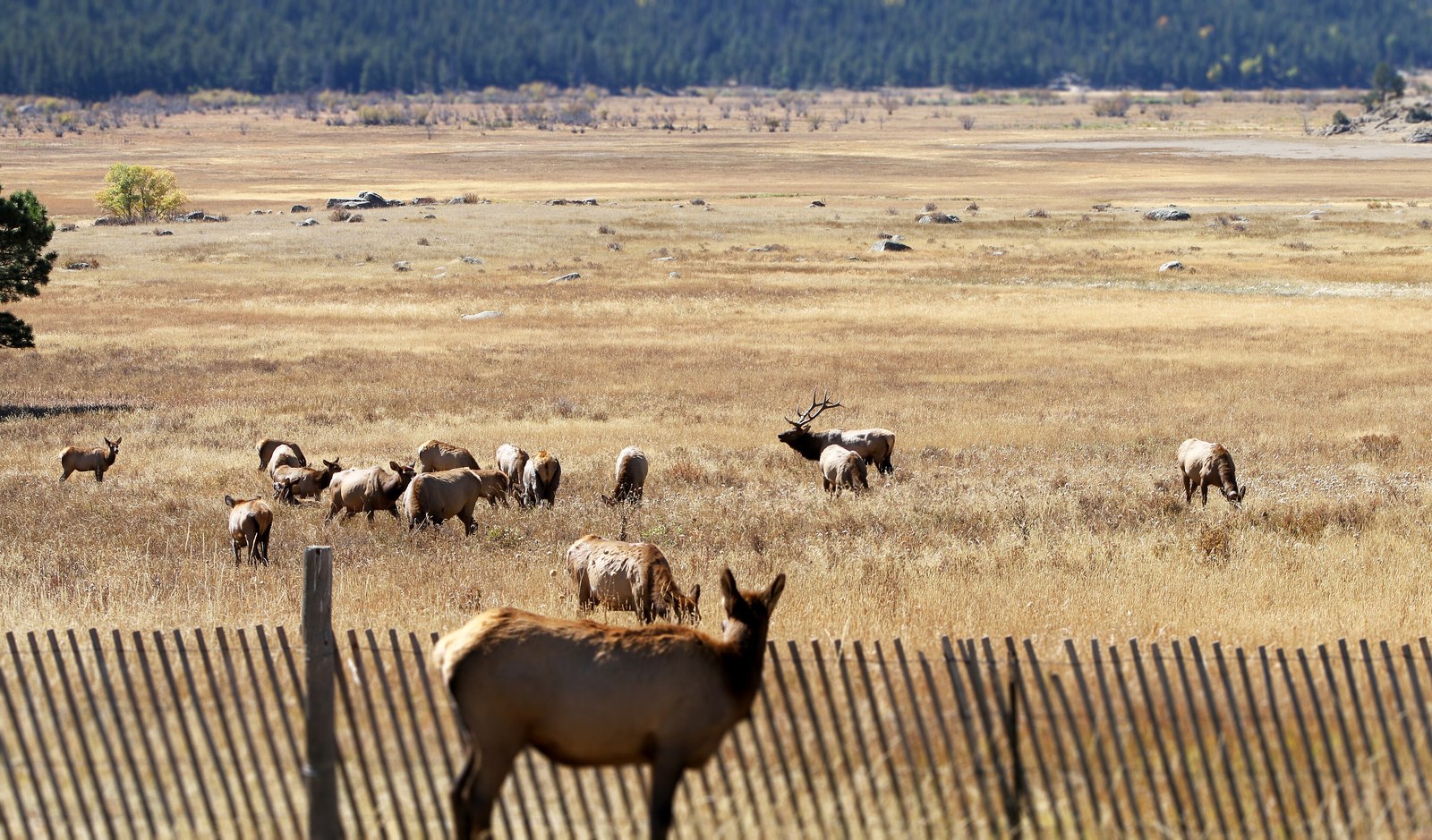
Elk in the Moraine Park meadow, where day one ends. Photo: National Park Service, public domain.
Morning
Sprague Lake first: flat, short, and the range reflects in it on a calm morning. It is the right first hour at 9,500 feet.
Midday
Bear Lake itself, then the walk down to Alberta Falls. Keep the day deliberately easy while your body catches up to the altitude. Day one is the lightest day in this plan on purpose; headaches, nausea, and a bad night are the standard penalty for ignoring that.
Afternoon and evening
Moraine Park in the late afternoon for elk in the meadow and the long light, then an early night in Estes Park. One rule for the corridor: if you leave the Bear Lake area, re entry is only allowed after 2 p.m. Plan the day as one entry, not two.
Base: Estes Park tonight. The east side has the rooms and the Bear Lake access, and the early night is part of the altitude plan, not a missed opportunity.
Day 2: Trail Ridge Road, end to end
RouteMany Parks Curve and Rainbow Curve in the morning, the Alpine Visitor Center before its lot fills, down the west side to the Colorado River trailhead and Grand Lake, then back over the top.
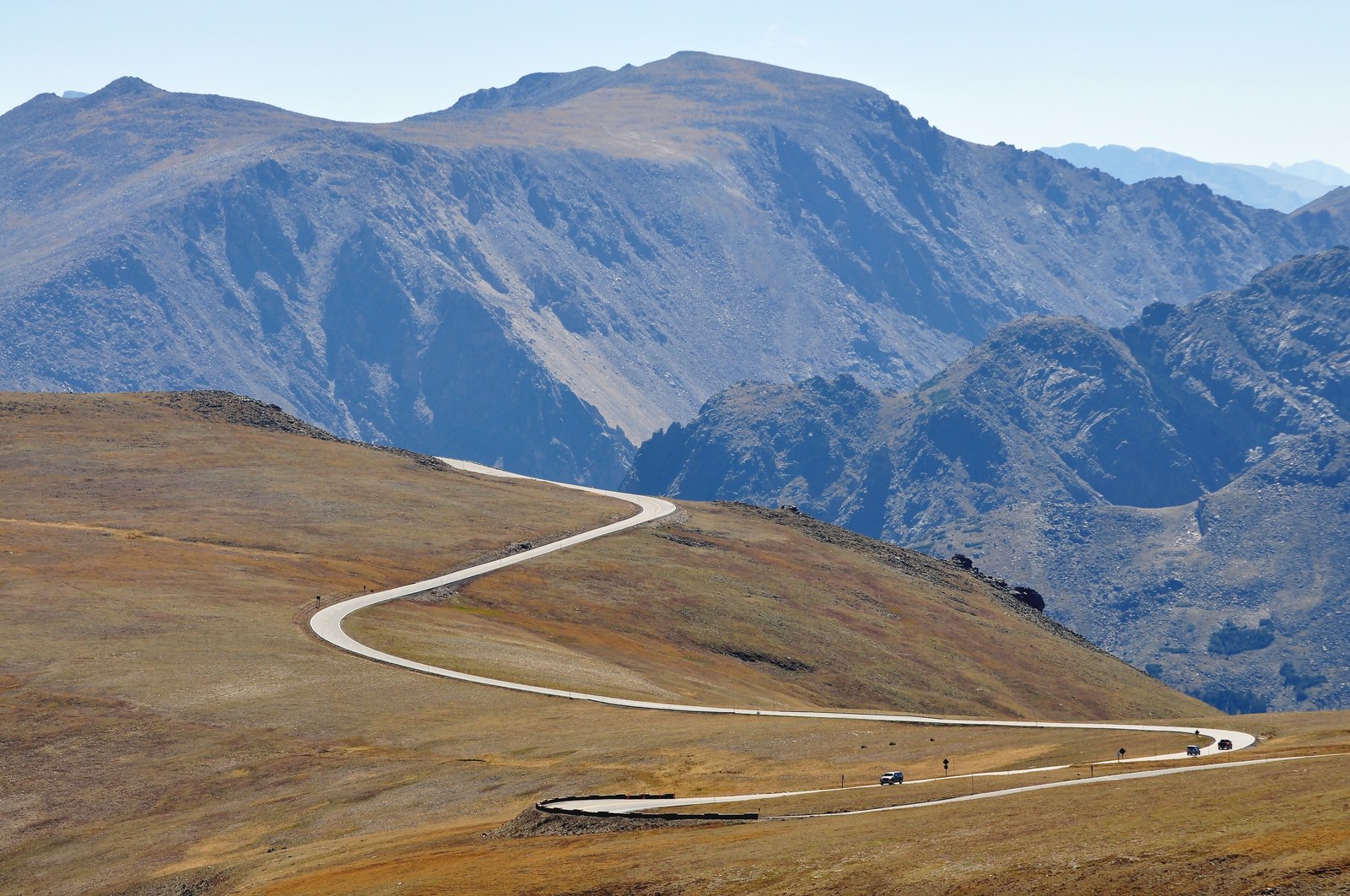
Trail Ridge Road crossing the tundra, above 12,000 feet. Photo: National Park Service, public domain.
Morning
An early start up Trail Ridge Road, the highest continuous paved road in the US park system at over 12,000 feet. Many Parks Curve, Rainbow Curve, then the Alpine Visitor Center at the top before its lot fills.
Midday
Down the west side with stops at the Colorado River trailhead and the Holzwarth Historic Site. Lunch in Grand Lake, the quiet town at the west entrance.
Afternoon and evening
Back over the top in the afternoon, watching the sky the whole way. Afternoon thunderstorms at altitude are near daily in summer and arrive fast, and if storms are building over the Divide, the turnaround rule is simple: go down, either side, and finish the road another day.
Base: the end you started from, or Grand Lake if the trip leans west. This whole day depends on Trail Ridge Road being open. In the first and last weeks of its season, check its status the night before and keep day one and day three swappable.
Day 3: West side water and a low key finish
RouteWild Basin in the morning, Copeland Falls and Calypso Cascades, then Lily Lake and the Twin Sisters area on the way back toward Estes Park.
Morning
Wild Basin in the morning: Copeland Falls and Calypso Cascades on an out and back that turns around whenever the group says so. After a day at altitude on the road, a waterfall trail at walking pace is the right register for a last day.
Midday
Lily Lake and the Twin Sisters area on the way back toward Estes Park, or the Estes Park riverwalk if the trip has used up its hiking legs.
Afternoon and evening
A last timed entry check for tomorrow's drive out, and a proper dinner in town. If a Bear Lake sunrise is still on the wish list, tonight is when the night before release happens, at 7 p.m. sharp.
Base: onward. Denver is about 90 minutes from Estes Park in clear conditions. Trail Ridge status, weekend traffic, and elk all get a vote, so pad the drive.
Season notes, briefly
PeakOpenLimited / winter
Trail Ridge Road is seasonal: it typically closes in mid October and reopens in late May, and snow can close it temporarily in any month, so confirm road status the week of the trip, not the month before. Old Fall River Road, the one way dirt road up Fall River Pass, runs a shorter season still, roughly July into early fall.
Bear Lake Road parking fills even with reservations in hand at midday. The Park and Ride shuttle from the Beaver Meadows side exists for exactly this; use it instead of circling. And the altitude pattern holds all summer: trails early, summits and exposed ridges done by noon, lower ground after.
The full planner, in one place
This page is the route. The Rocky Mountain Trip Planner is the route plus everything around it: a workbook with the deadlines and windows as live countdowns from your trip date, the budget with the pass breakeven run on your numbers, an editable day planner, and a packing and prep checklist. It is our product, made by Summit and Spur, and this article is the honest sample of how it thinks.
Get the Rocky Mountain Trip Planner, $7.99
Rules verified October 15, 2026 against official park sources; 2027 rules were not yet final at that date. Confirm before booking. An independent planner from Summit and Spur, not affiliated with the National Park Service, and not a booking service. This guide is written from verified research and our planner's material; it is not a trip report.
New park planners and free tools, first.
One email when something new ships. No spam, unsubscribe anytime.